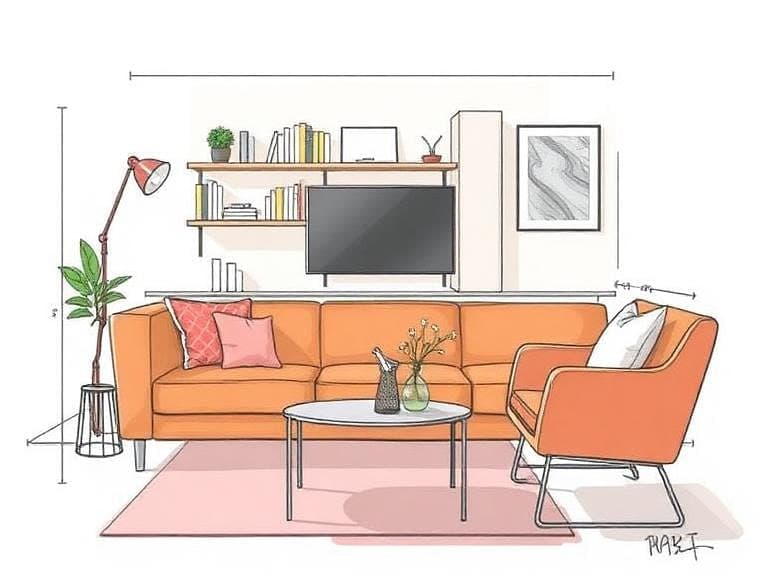
Fundamentals of Sketching Compact Interiors
Effective furniture sketching begins with a clear representation of a room’s static elements. As reported by MORALVE, drawing the room’s outline and then sketching in fixed features such as windows, doors, and built‑in utilities creates a reliable base for all subsequent design iterations. Digital room planners can supplement hand sketches by producing a 2D map, allowing designers to experiment with scale and proportion without committing to physical models.
For small spaces, the sketch must emphasize vertical clearance, circulation pathways, and the relationship between furniture footprints. Accurate measurement and proportional scaling prevent later conflicts when introducing multifunctional pieces.
Integrating Height‑Adjustable and Expandable Tables
The Expand Furniture Transforming Table exemplifies a dual‑function solution that reduces floor clutter. Its height‑adjustable mechanism lifts the surface from coffee‑table height to a standard dining height, while an expandable surface can double or even triple in size, accommodating up to ten occupants depending on the model. Sketches should illustrate both configurations: a low‑profile layout for daily living and an expanded arrangement for gatherings. By drawing the table’s pivot points and extension tracks, designers can verify clearance for surrounding chairs and traffic flow.
When positioning this table, prioritize a central location that maintains a minimum clearance of 30 cm on all sides, ensuring smooth operation of the height‑adjustable mechanism. Include notes on the table’s weight distribution to anticipate floor load limits in the sketch.
Modular and Folding Mechanisms for Flexible Use
Smart furniture for small spaces often features folding, sliding, or modular mechanisms that enable quick role changes. Furn Heaven highlights examples such as sofa‑beds and wall‑mounted dining tables. In a sketch, represent the folded state with dotted lines or overlay symbols to indicate hidden components. When unfolded, the same furniture occupies a larger footprint; therefore, the sketch must show both states side by side for comparison.
Key modular pieces identified across multiple sources include:
- Pullout sections and customizable built‑in bed frames that hide during daylight hours.
- Sleek fold‑downs and self‑storing systems that collapse into wall cavities.
- Sofas that turn into beds, paired with compact coffee tables that can be tucked underneath.
Each item should be annotated with its sliding track direction, hinge type, and required clearance when deployed. This level of detail assists contractors and interior fitters in confirming that the physical space can accommodate the mechanism’s full range of motion.
Wall‑Mounted and Rotating Storage Solutions
Archiproducts’ guide emphasizes sliding wardrobes, rotating columns with hidden compartments, and wall‑mounted units as core space‑saving strategies. Sketches of these solutions must include elevation views to illustrate how the units disappear into the wall plane when not in use. For rotating columns, illustrate the axis of rotation and the maximum outward extension, noting any adjacent furniture that could be obstructed.
Wall‑mounted storage also benefits from raised‑leg designs. MORALVE notes that pieces with raised legs, such as mid‑century modern sofas or beds, allow light to pass underneath, creating an airy perception of space. In sketching, draw the leg height and the clearance beneath each piece, indicating potential for additional low‑profile storage or decorative accents.
Material Choices and Mobility Considerations
Material selection directly impacts both visual weight and physical maneuverability. Glass and acrylic tables, as suggested by Space‑Saving Furniture Ideas (2026‑03‑02), provide a transparent aesthetic that reduces visual clutter. When sketching such pieces, use thin linework to convey translucency, and annotate the material to guide procurement.
Mobility is another critical factor. The 31 Creative Small‑Space Furniture Ideas article advises selecting furniture with casters or lightweight construction for easy repositioning. In a sketch, indicate caster locations with small circles and note the weight class (light, medium, heavy). This information assists occupants in reconfiguring the room for different activities, such as converting a work area into a dining space.
Specialized Sketch Boxes and Mobile Office Set‑ups
Timberelle’s 17+ Smart Innovative Furniture Ideas introduces a wooden artist sketch box or table easel that serves as a sturdy base for a mobile office. The sketch box provides customizable storage, allowing tools, paperwork, and electronics to be organized within the same footprint. When drafting a small‑space layout, depict the sketch box as a central hub, with optional extensions for monitors or printers. Include measurements for drawer depths and the maximum load capacity to ensure ergonomic comfort.
Pairing the sketch box with a height‑adjustable table further maximizes versatility. The combined system can transition from a seated drawing station to a standing workstation, supporting health‑focused design trends without sacrificing floor space.
Comprehensive Sketching Workflow for Small‑Space Design
A disciplined workflow integrates the above elements into a cohesive design package:
- Step 1 – Base Plan: Measure and outline the room, marking all immovable fixtures.
- Step 2 – Circulation Mapping: Draw primary traffic routes, ensuring at least 60 cm width for comfortable movement.
- Step 3 – Furniture Placement: Insert space‑saving pieces, using dual‑state symbols for expandable or folding items.
- Step 4 – Clearance Verification: Annotate required clearances for each mechanism, referencing manufacturer specifications such as the Expand Furniture Transforming Table’s height‑adjustable range.
- Step 5 – Material & Mobility Notes: Label glass, acrylic, or raised‑leg components, and indicate caster locations for mobile units.
- Step 6 – Review & Iterate: Use digital room planners to simulate each configuration, adjusting dimensions as needed.
This process ensures that every sketch communicates both aesthetic intent and functional feasibility, reducing costly revisions during construction.
Conclusion
Furniture sketching for small spaces demands meticulous attention to modular mechanisms, material transparency, and mobility features. By grounding sketches in proven space‑saving innovations—such as height‑adjustable tables, rotating storage columns, and wall‑mounted units—designers can create adaptable interiors that maximize utility without compromising style. Detailed annotations, dual‑state representations, and clear clearance metrics transform a simple drawing into a reliable blueprint for compact living environments.